Reading Time 5 mins
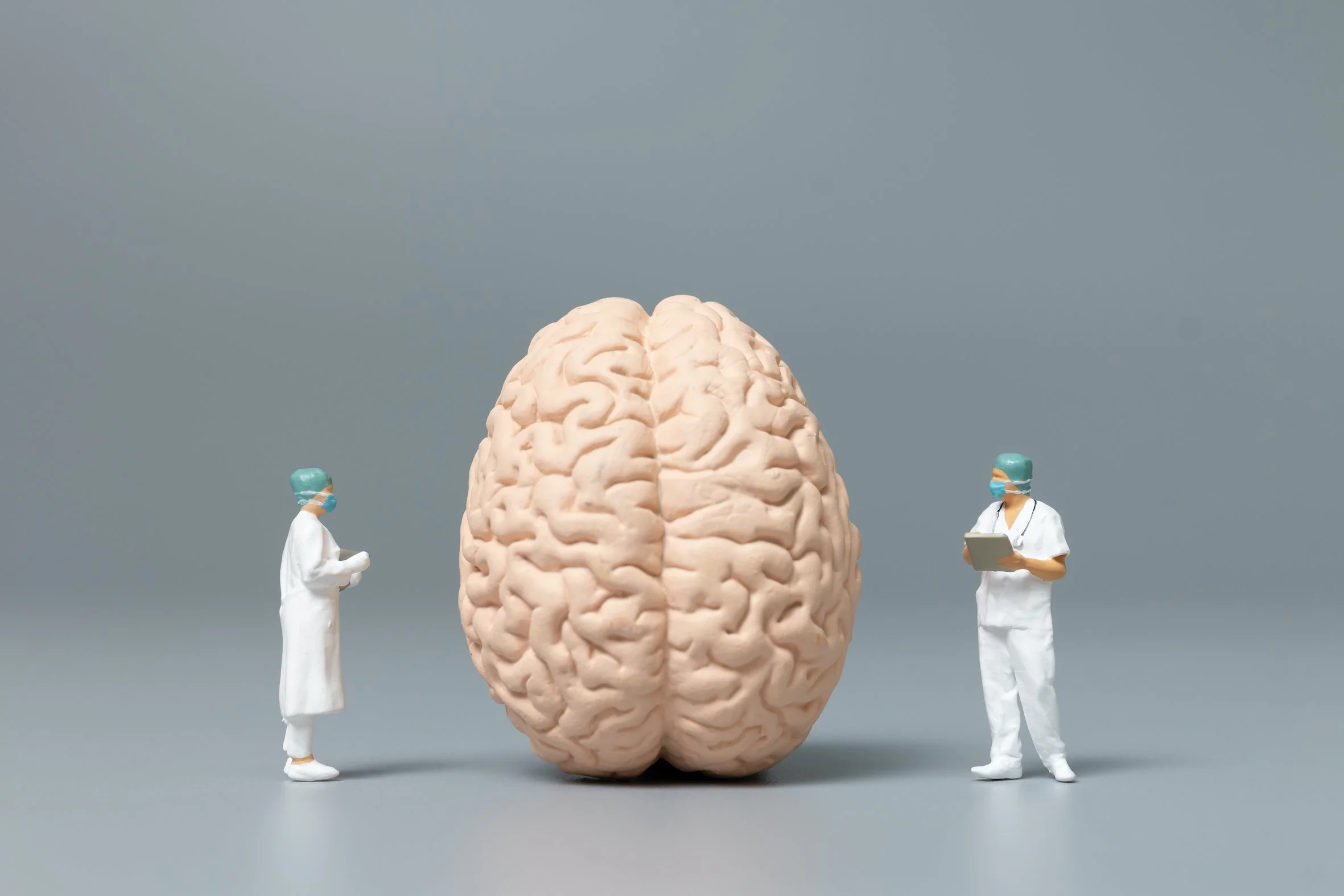
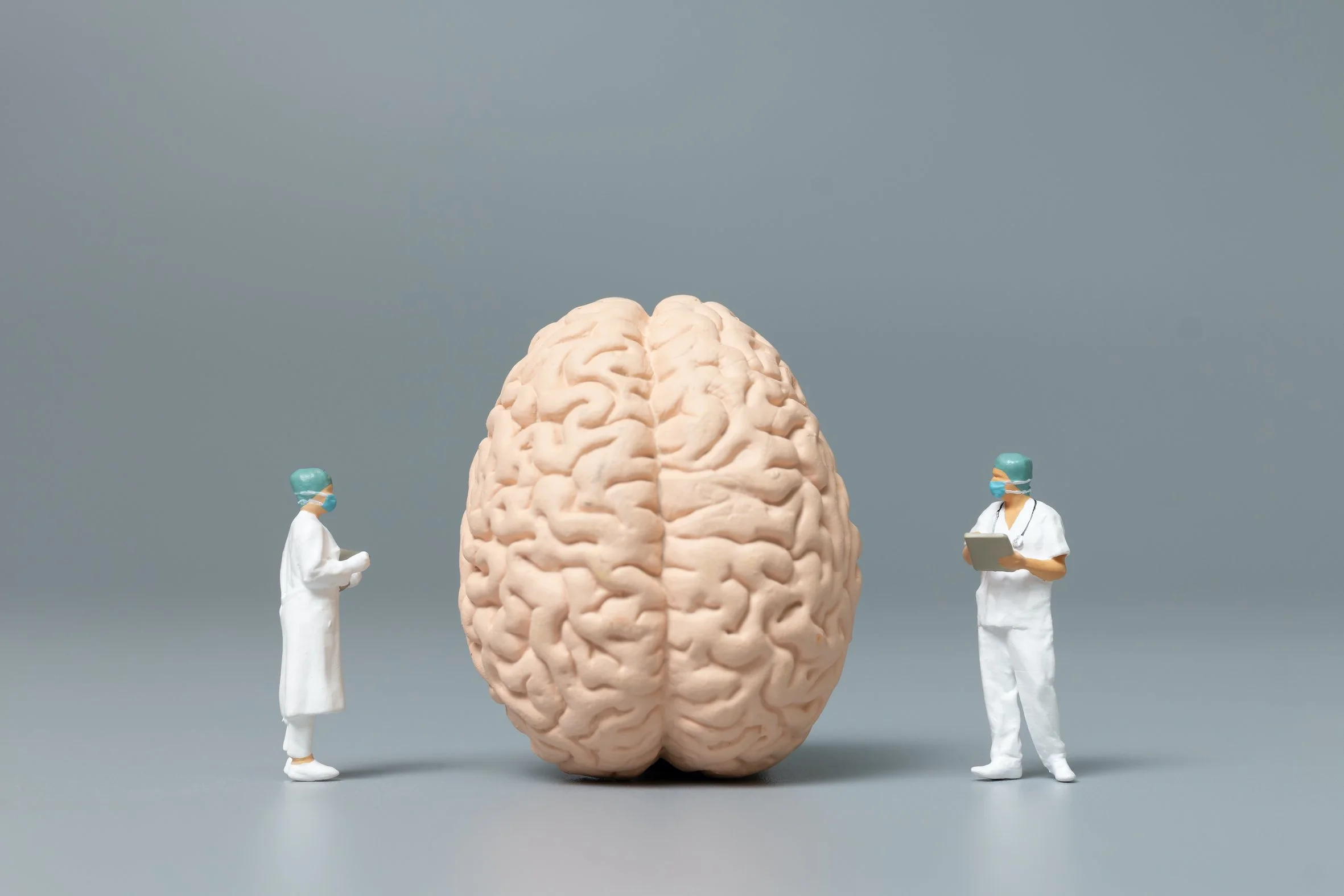
So when I found out that a fresh, unfixed human brain resembled a lump of wobbly tofu, I was stunned. This was the complete opposite of the firm, rubbery, hard pink model shown to us in GCSE biology class.
At first, I felt duped by this new information, but then awe took over.
-How something so fragile and whimsical as a wobbly brain blob could produce such complex calculations and experience such rich emotions did—and still does—amaze me.
In its natural state, the seat of human consciousness, memory, and emotion has the structural consistency of soft tofu, panna cotta, or cold butter.
It is so delicate that under the mere pressure of its own weight, it would slowly begin to sag and lose its shape.
If we strip away the existential poetry and look at it through the lens of pure biochemistry, the recipe for a human brain is deceptively simple.
It is a highly pressurised, incredibly complex emulsion of water, specialised fats, structural proteins, and a handful of trace minerals.
Understanding exactly what the brain is made of is not just an academic exercise for neuroanatomists.
The Macroscopic Blueprint: The Big Three
When we break the brain down to its core physical components, we find that it is dominated by three main ingredients. If we look at the organ's wet weight, the distribution of its structural resources is remarkably lopsided.
1. Water: The Living Matrix (73–80%)
By far the most abundant ingredient in your skull is water.
Roughly 75% of your total brain mass is pure liquid.
This water is not just sloshing around idly like fluid in a water balloon; it serves as the essential matrix for all cellular communication.
It forms the intracellular fluid inside neurons, the extracellular fluid bathing the tissues, and the cerebrospinal fluid (CSF) that circulates through the brain's ventricles to provide structural buoyancy and metabolic waste clearance.
Because the brain is so water-dense, it is exquisitely sensitive to shifts in systemic hydration.
Even a minor dip in hydration levels—as little as a 1% to 2% fluid deficit—can cause immediate cognitive degradation, disrupting short-term memory, attention span, and psychomotor coordination.
Which is why drinking lots of water and staying hydrated is so important.
2. Lipids: The Fat-Headed Truth (10–12% Wet Weight / 60% Dry Weight)
If we remove all the water from the brain and examine its remaining dry mass, a fascinating truth emerges: the solid brain is a remarkably fatty organ.
Roughly 60% of its dry weight is composed of lipids.
This makes the brain the second most fat-dense organ in the entire body, outmatched only by adipose tissue (your physical fat storage).
However, this is not the kind of fat you find stored around your waistline.
The brain does not use lipids as a stagnant energy reserve.
Instead, these fats are structural powerhouses, serving as the literal insulation that makes rapid electrical communication possible between distant brain regions.
3. Proteins and Amino Acids (7–8% Wet Weight)
Proteins form the structural scaffolding of the brain's cellular networks. They construct the internal skeletons of cells (the cytoskeleton), create the specialised receptors that dock neurotransmitters, and form the enzymes that drive metabolic chemical reactions.
Without this intricate protein architecture, the brain's fatty emulsions would simply collapse into an amorphous pool of lipids and fluid.
The Microscopic Framework: Neurons vs. Glial Cells
If we peer past the raw chemical ingredients and look at the actual living cellular structures of the brain, we enter a cut-throat cellular ecosystem.
For generations, textbook science focused almost exclusively on the neuron as the undisputed monarch of the central nervous system.
We now know that the story of the brain's cellular composition is far more collaborative.
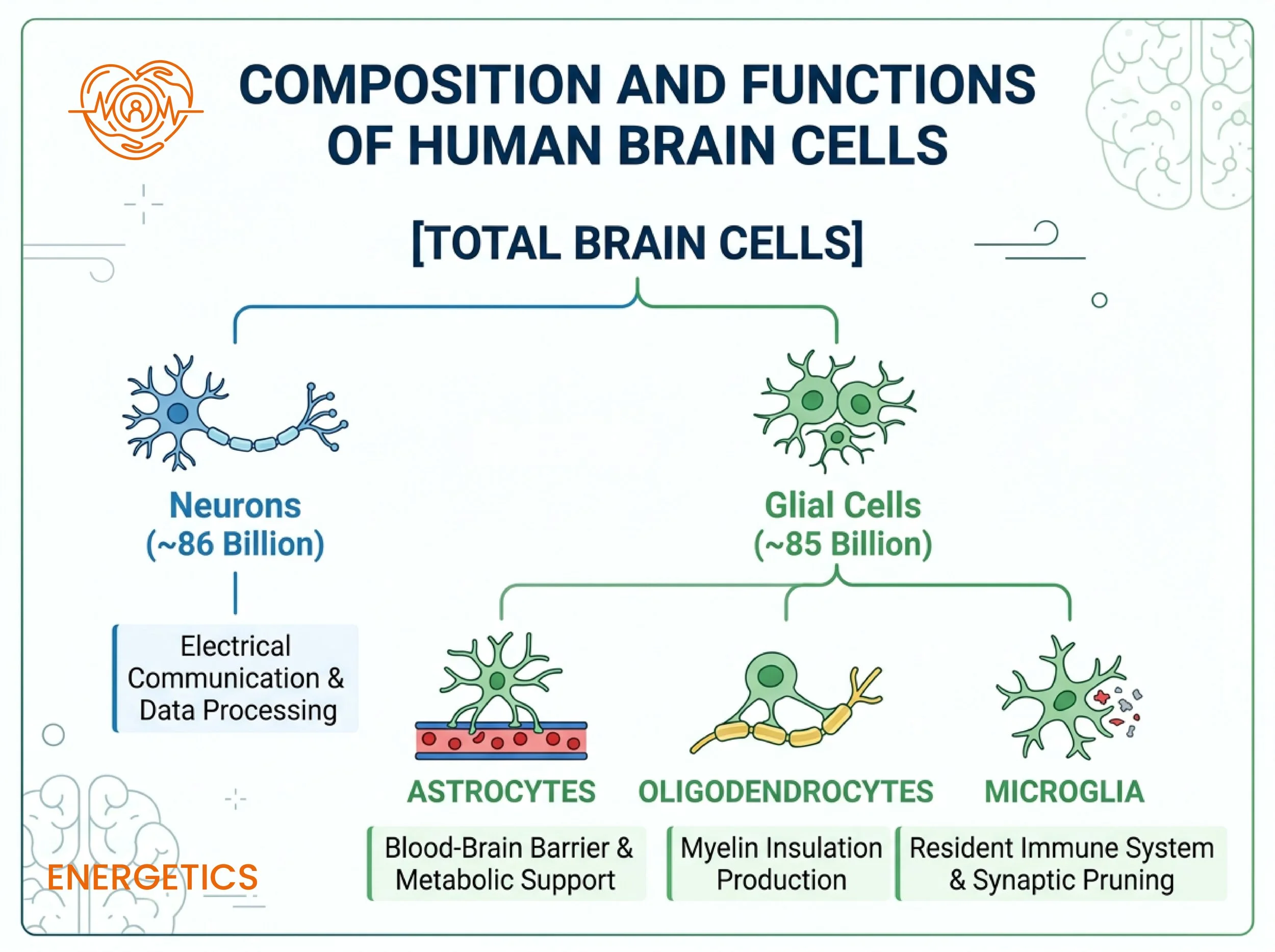
The brain contains roughly 86 billion neurons, matched in near-equal measure by approximately 85 billion glial cells.
Rather than being simple, passive cellular glue, these glial cells are active participants in human cognition, split into three highly specialised factions:
Astrocytes: These star-shaped cells act as the ultimate border control agents, wrapping their cellular feet around local blood vessels to construct the blood-brain barrier (BBB).
They selectively pull glucose and nutrients out of the bloodstream to feed hungry neurons while ruthlessly locking out circulating toxins, pathogens, and inflammatory proteins.
Oligodendrocytes: These are the master electricians of the brain.
They wrap their lipid-rich cell membranes around the long, wire-like axons of neurons, creating a white, insulating sheath called myelin.
This myelination is what allows electrical action potentials to travel down a nerve fiber at speeds exceeding 250 miles per hour, rather than a sluggish crawl.
Microglia: The resident immune defense system of the brain. Because the blood-brain barrier isolates the central nervous system from the body's standard immune cells, microglia act as specialised, highly mobile macrophages.
They patrol the brain tissue, hunting down cellular debris, neutralising pathogens, and systematically pruning away weak, under-utilised synapses to keep the neural network lean and efficient.
Structural Anatomy: Grey Matter vs. White Matter
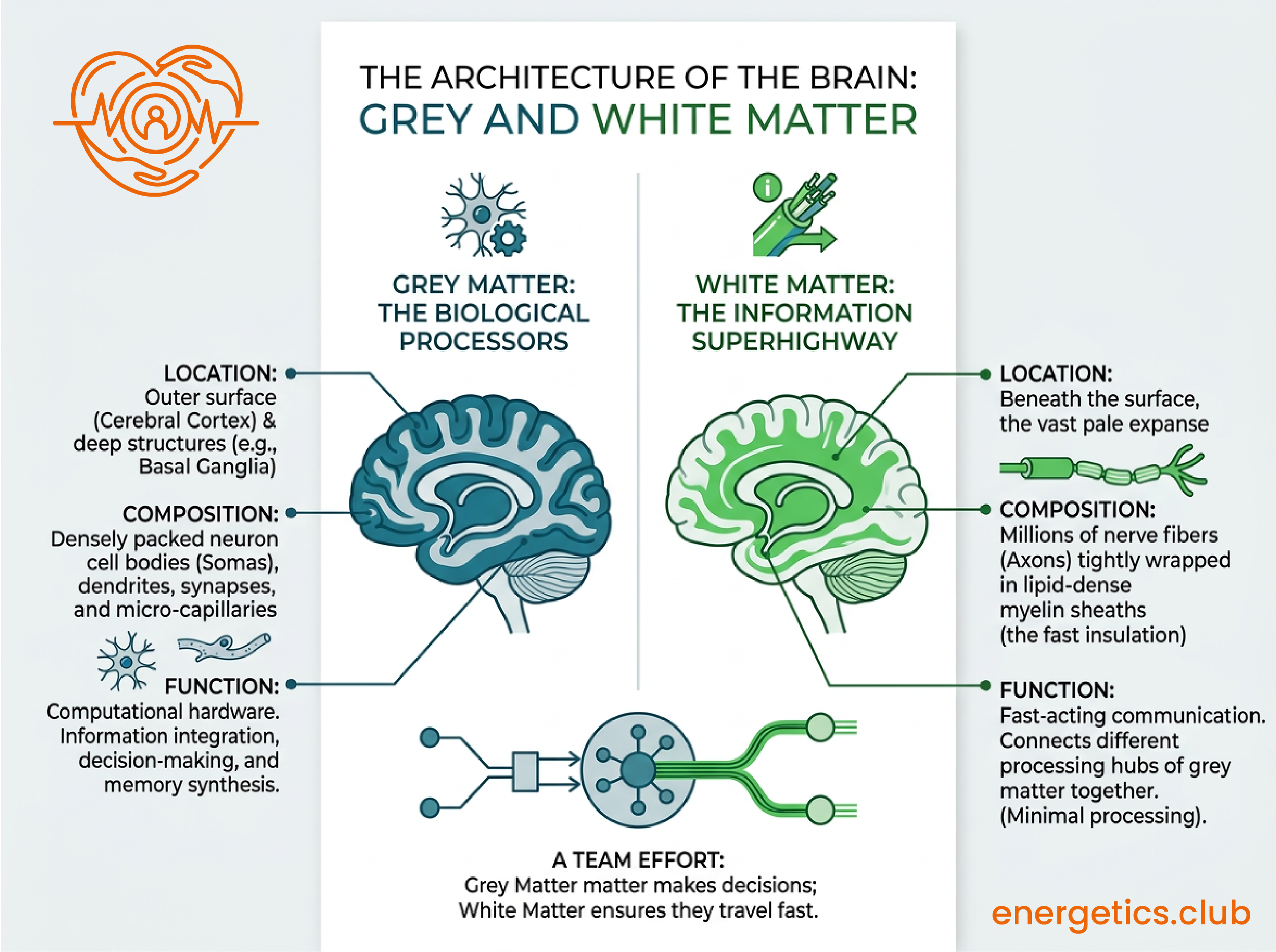
Apparently, if you look at a cross-section of a human brain, the naked eye would be able to immediately distinguish between two starkly different zones: grey matter and white matter.
This clear visual boundary directly reflects the underlying biochemical ingredients we have just explored.
Grey Matter: The Biological Processors
The grey matter forms the outer, wrinkly surface of the cerebral cortex and deep internal structures like the basal ganglia.
It has a pinkish-grey hue in life because it is densely packed with neuron cell bodies (somas), dendrites, synapses, and a rich network of micro-capillaries delivering fresh blood.
This is the brain's computational hardware—the zone where information is actively integrated, decisions are made, and memories are synthesized.
White Matter: The Information Superhighway
Beneath the surface layer of grey matter lies the vast, pale expanse of white matter.
This region looks distinctly white and glistening because it is composed almost entirely of millions of nerve fibers (axons) tightly wrapped in lipid-dense myelin sheaths.
The high fat content acts exactly like the white plastic insulation on an electrical extension cord.
The white matter does not do much heavy data processing itself; instead, it serves as the fast-acting information superhighway that links different processing hubs of grey matter together.
If you are a student looking to brainhack both your grey and white matter into optimal studying, read this next.
The Quantum Elements: Electrolytes and the Electrical Charge
We cannot fully address what the brain is made of without zooming in on the microscopic, inorganic minerals that turn this soft, watery tissue into a living electrical grid.
The brain is fundamentally an electrochemical organ; it generates enough electrical wattage to power a low-voltage LED light bulb.
Vmembrane≈−70 mV
This electrical current is driven entirely by the precise movement of four simple mineral ions: Sodium (Na+), Potassium (K+), Chloride (Cl−), and Calcium (Ca2+).
When a neuron is at rest, its internal environment maintains a negative charge of roughly −70 millivolts relative to the outside of the cell.
This baseline charge is established by specialised protein pumps that constantly force sodium ions out of the cell while pulling potassium ions inside.
When a thought fires, tiny ion channels snap open, allowing sodium to rush inside like water through a broken dam. This sudden shift in electrical voltage creates the action potential that cascades through your neural networks.
Without a constant, tightly regulated supply of these basic electrolytes, your brain's internal electrical grid suffers an immediate blackout, manifesting as severe confusion, muscle tremors, or cognitive collapse.
Conclusion: The Ultimate Biological Masterpiece
I think the true wonder of the human brain is not that it is made of exceptional, exotic, or supernatural components.
For me, the real magic lies in the mechanical organisation of some very ordinary ingredients.
Evolution has taken the most basic, everyday materials available on Earth—water from ancient oceans, basic fatty acids from dietary sources, and simple elements from the periodic table—and organised them into neural architecture complex enough to contemplate its own existence.
When I think about my brain being a fluid-rich, fat-dense, protein-scaffolded organ, it makes me completely reframe how I look at daily self-care.
I cannot expect a high-performance, electrical supercomputer to operate smoothly if its physical components are parched from lack of water, stripped of structural fats, or clogged by neuroinflammatory cellular waste.
So for me, providing the nervous system with the foundational, biochemical support it needs to stay balanced, resilient, sharp, and fully optimised allows for a life full of exploration and fun!
-And I’ll never look at tofu the same way again!
To read some more about the amazing ‘symphony’ that is your brain, read this next.

Scientific References & Bibliography
Read This Now



Disclaimer: This article is for general informational purposes only and does not address individual circumstances, substitute for professional advice, or serve as a basis for decision-making. You should always seek the guidance of a physician or qualified healthcare provider regarding a medical condition, and never disregard or delay seeking professional medical advice due to this content. Any action taken based on this information is entirely at your own risk and responsibility; Energetics, its staff, and its medical advisors disclaim all liability for any inaccuracies, errors, or any personal or professional loss incurred as a direct or indirect consequence of using this content.