Updated October 2026: Reading Time 5 mins
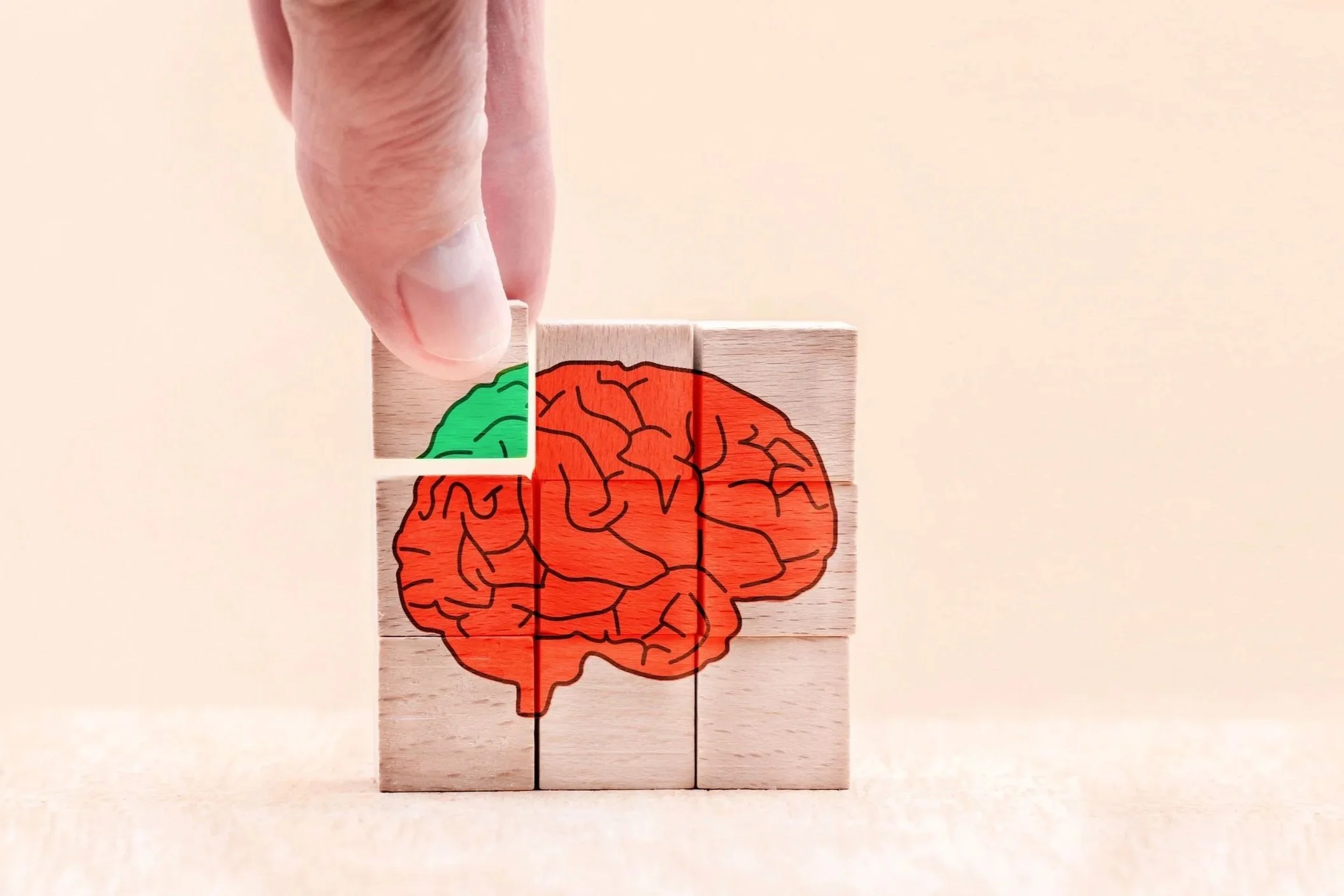
If I’m entirely honest, I used to treat my brain like that cupboard in the kitchen that gets stuffed with random containers and life debris. You know the one... chaotic, slightly neglected, stuffed full, but functioning indefinitely as a dumping ground as long as no one looks too closely.
That said, I still expected my brain to provide peak performance, witty conversation, and flawless memory recall — whilst fuelling it with pizza, tequila, six hours of interrupted sleep, and the ambient anxiety of an uncompleted tax return.
Welcome to the ultimate cognitive paradox.
(To see how this fits into our complete guide to living with stress and anxiety, you can read our master directory)
But I’ve recently learnt that my brain is not an indestructible appliance; it is a highly sophisticated, beautifully adaptive organ that consumes roughly 20% of my body’s entire metabolic energy.
Achieving an "optimal brain" isn't about becoming a flawless, robotic supercomputer overnight.
It is about understanding the fascinating biology under the hood, supporting neural strength, and treating the connection between my mind and body with some respect, nay, awe.
Whether you are interested in banishing the afternoon brain fog, protecting your cognitive longevity, or hoping to stop walking into rooms and forgetting why you went in there in the first place- this guide provides a foundational framework for a long-term healthy brain.
1. How Your Brain Cells Power Your Mind
To think clearly and stay sharp, you have to start with how your brain cells produce energy.
Your brain runs on fast electrical and chemical signals travelling across trillions of connections. That takes a massive amount of fuel, which is produced by mitochondria—the tiny power stations inside your cells.
When these power stations slow down—often due to stress, inflammation, or a lack of proper nutrients—you start to experience brain fog, mental fatigue, and trouble making decisions.
Protecting your brain means helping it build new power stations while preventing the inflammation that damages existing ones.
At the same time, long-term mental sharpness relies on a brain protein called BDNF (Brain-Derived Neurotrophic Factor).
Think of BDNF as fertiliser for the brain: it encourages new brain cells to grow and keeps the existing ones healthy. Higher BDNF levels lead to faster learning, better memory, and stronger protection against age-related decline.
2. Neuroplasticity: How to Rewire Your Brain
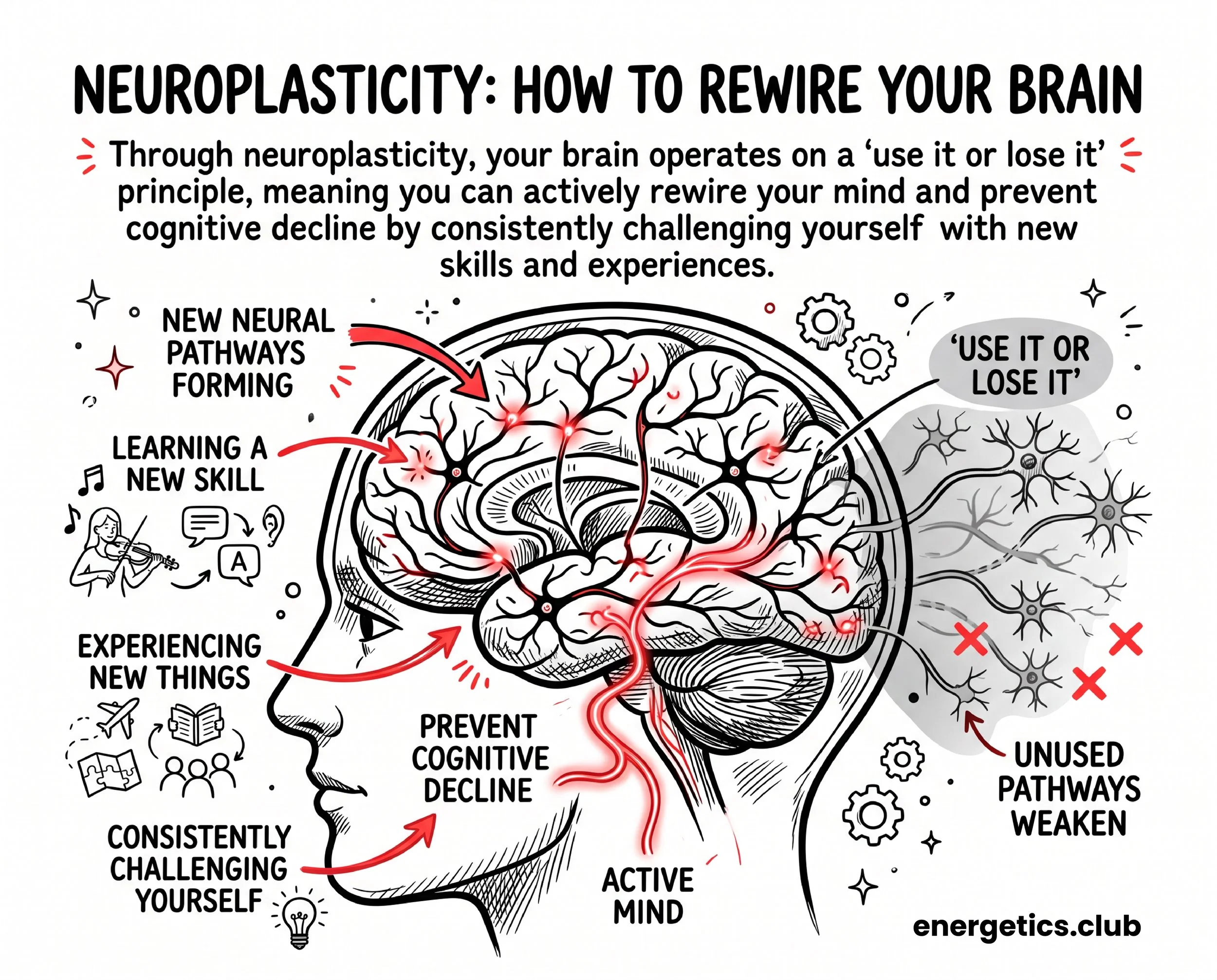
For a long time, scientists believed the adult brain was fixed and unchangeable. We now know that isn't true. Thanks to neuroplasticity, your brain can physically adapt and rewrite its connections throughout your entire life in response to what you learn and experience.
Your brain builds itself on a simple rule: use it or lose it.
Active connections get reinforced. The brain insulates heavily used pathways so signals travel faster.
Unused connections wither away.
This means mental decline isn't just an inevitable part of getting older—it often comes down to underusing certain parts of the brain. By challenging yourself with new skills, changing up your environment, and using specific physical habits, you can actively guide how your brain rewires itself. This adaptability is key to recovering from chronic stress, breaking bad habits, and sharpening your focus.
3. The Body-Brain Connection: How Your Physical State Shapes Your Mind
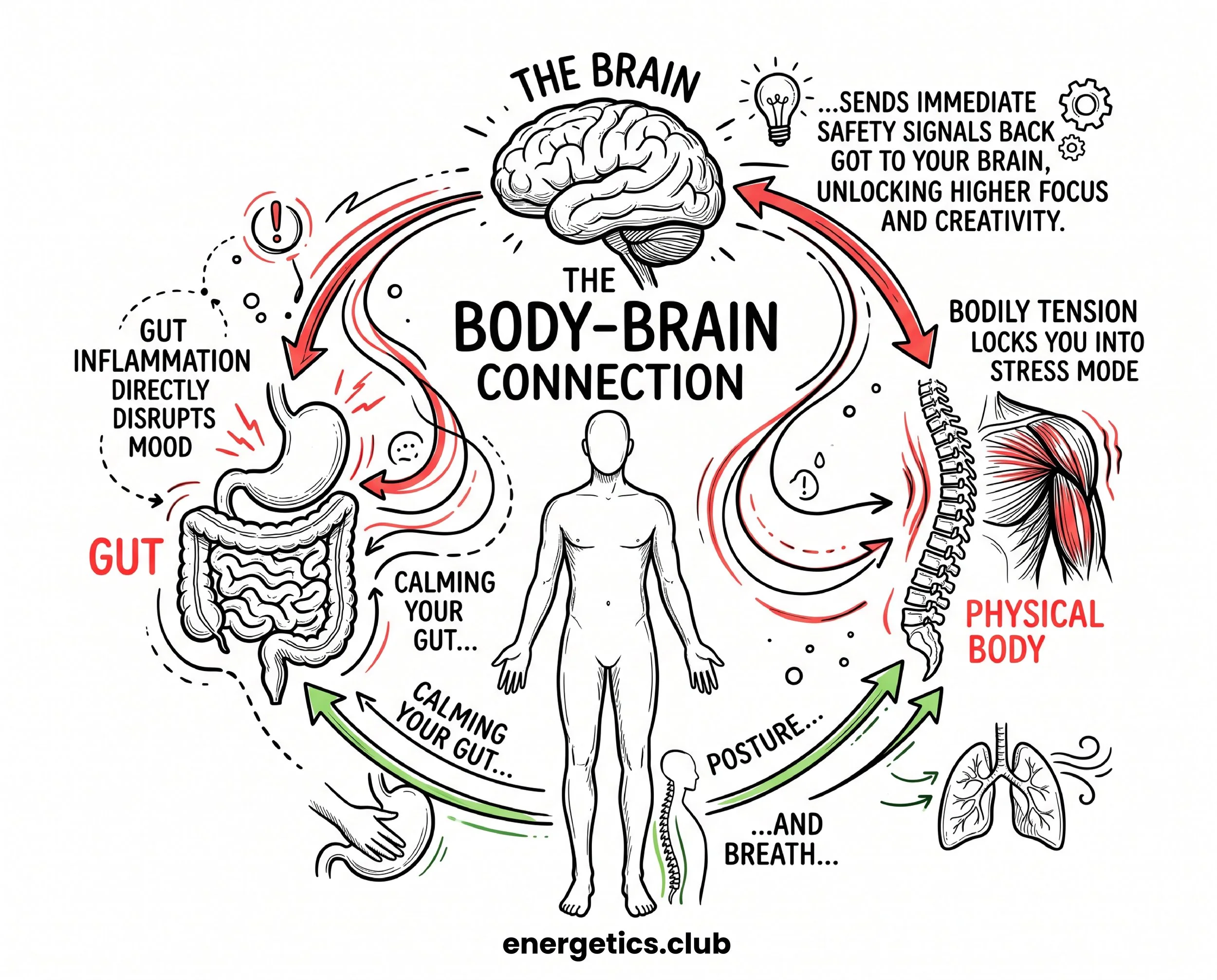
Your brain doesn't work in a vacuum; it is constantly taking cues from the rest of your body through two main two-way communication lines:
The Gut-Brain Axis
Your gut has its own complex network of nerves, often called your "second brain," which communicates directly with your head via the vagus nerve.
In fact, over 90% of your body's serotonin (the mood-stabilising chemical) and a large portion of its dopamine are synthesised in your gut, managed by your microbiome.
When your gut gets inflamed, that inflammation can cross into the brain, throwing your mood and mental clarity out of balance.
The Body-to-Brain Signal
Your brain constantly checks the state of your body to decide if you are safe.
Chronic muscle tension, poor posture, and shallow breathing tell your brain's threat centre that you are under stress, keeping you locked in a low-level survival mode.
Calming the physical body sends a clear signal of safety back to the brain, freeing up resources for clear thinking, logic, and creativity.
4. Practical Strategies for Peak Mental Performance
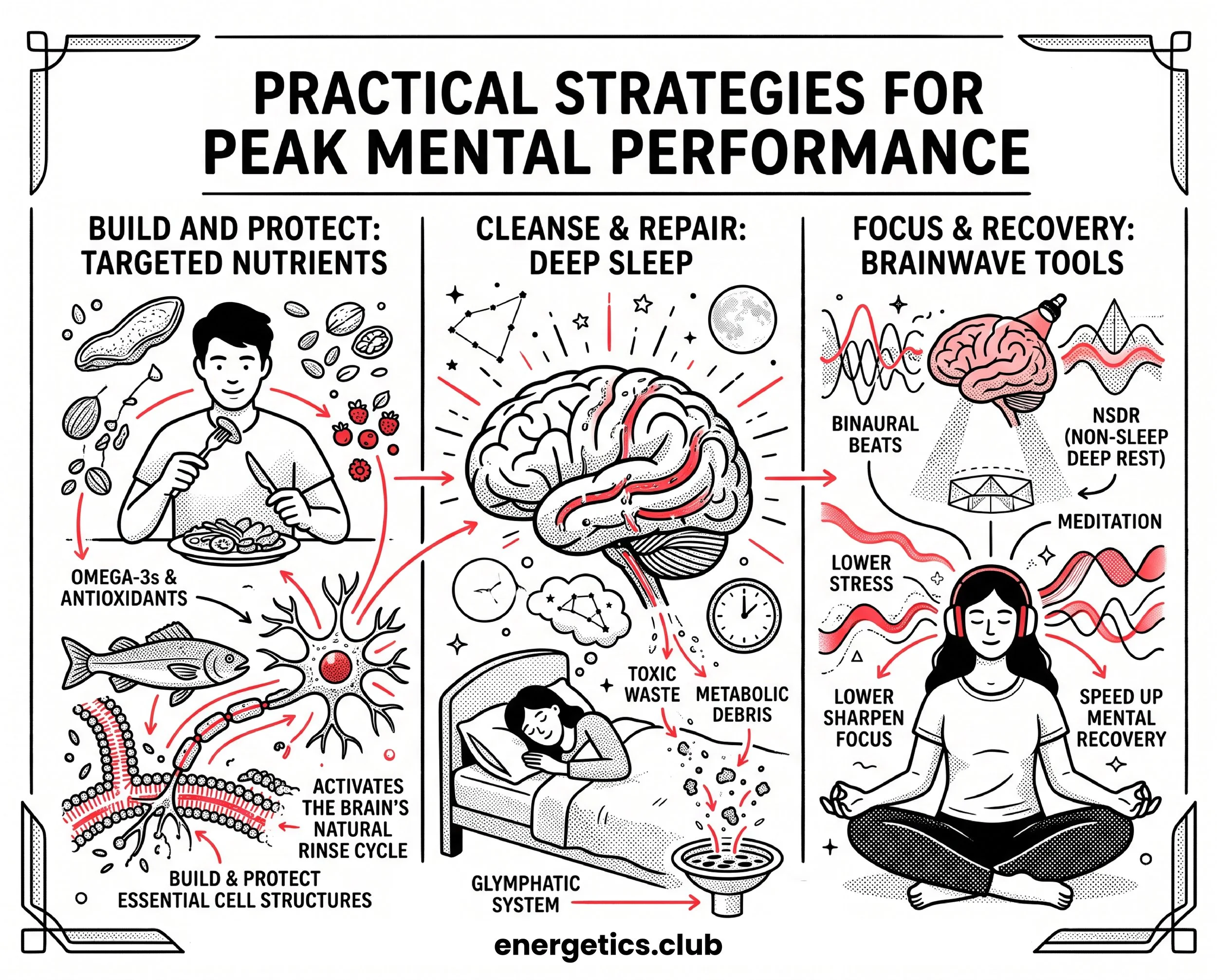
Getting your brain operating at its best requires supporting its chemistry, daily habits, and direct neural stimulation:
Targeted Nutrition: Your brain needs specific nutrients to build chemical messengers. Omega-3 fats (especially DHA) form the actual structural walls of your brain cells, while antioxidants protect delicate brain fats from damage.
Sleep-Driven Brain Cleaning: You cannot optimise your brain without quality sleep.
During deep sleep, your brain uses its internal rinse cycle (the glymphatic system) to wash away cellular waste and toxic protein buildup that accumulates while you are awake.
Brainwave Entrainment & Mind-Body Reset Tools: Beyond daily lifestyle habits, you can directly influence your brain state using targeted sound and conscious rest.
Custom audio frequencies—such as binaural beats—help entrain brainwaves into specific bands, guiding your mind into deep focus (Beta/Gamma) or profound relaxation (Alpha/Theta).
Combining these frequencies with structured practices like Non-Sleep Deep Rest (NSDR), Yoga Nidra, and guided meditation rapidly calms the nervous system, lowers stress, and accelerates mental recovery without needing actual sleep.
5. The Core Resource Directory (Deep Dives)
Generic advice won’t give you peak mental performance.
To truly unlock your focus, you need precise, science-backed habits that actually work for your nervous system.
Want to see where you stand? Find out if your daily routine is fueling your brain or draining it: The Symphony of the Mind: Is Your Brain a Stradivarius or a Kazoo?
You can also learn some great universal questions, answered, such as: How much energy the brain uses, how fast brain signals travel, or how much the brain can store, and finally, can you actually multitask?
From there, you can target your specific cognitive performance goals.
If you are experiencing age-related mental drift or subtle brain fog, you can deploy targeted memory-anchoring protocols by learning how to stop a fraying memory.
For those looking to maximise deep-work blocks, eliminate environmental distractions, and rapidly compress learning curves, our high-impact guide on the student brain hack to double your focus and bulletproof your memory offers immediate, practical steps. Looking into the question of whether we really do just use 10% of our brain? What is the brain made of? And finally, at what age is the brain fully developed?
To unlock advanced focus and recovery, you can leverage neuro-entrainment and peak flow states. Start by exploring the genius glue of gamma brainwaves to isolate the precise high-frequency neural oscillations responsible for cognitive breakthroughs.
Finally, to maintain this high-level output without burnout, discover how to seamlessly integrate these sound therapies into your daily routine for optimal living with binaural beats to beautifully balance your nervous system.
6. The Path Forward: Building Your Brain Architecture
At the end of the day, upgrading your brain health isn't about achieving absolute perfection or flawlessly executing a twenty-step neurological routine before sunrise.
That sounds like hell, and no one is going to do that.
The more the world exchanges information and research, the clearer it becomes that simple tools — like NSDR, Yoga Nidra, Kundalini meditations, conscious breathing, deep sleep, novel experiences, good food, and water (always remember water) — can elevate your brain from okay to optimum.
As this platform grows, this master guide will anchor an ever-expanding library of specific, deeply researched spoke articles.
We will dive into the exact protocols, science-backed tools, and practical habits that allow you to take the driver's seat in your own cognitive longevity.
For now, give yourself a little credit, perhaps fetch a glass of water for those hardworking mitochondria of yours, and let's get ready to build a more resilient mind together.
Read This Now





Disclaimer: This article is for general informational purposes only and does not address individual circumstances, substitute for professional advice, or serve as a basis for decision-making. You should always seek the guidance of a physician or qualified healthcare provider regarding a medical condition, and never disregard or delay seeking professional medical advice due to this content. Any action taken based on this information is entirely at your own risk and responsibility; Energetics, its staff, and its medical advisors disclaim all liability for any inaccuracies, errors, or any personal or professional loss incurred as a direct or indirect consequence of using this content.