Brain Health & Neuroplasticity: The Clinical Guide
Reading Time 5 mins
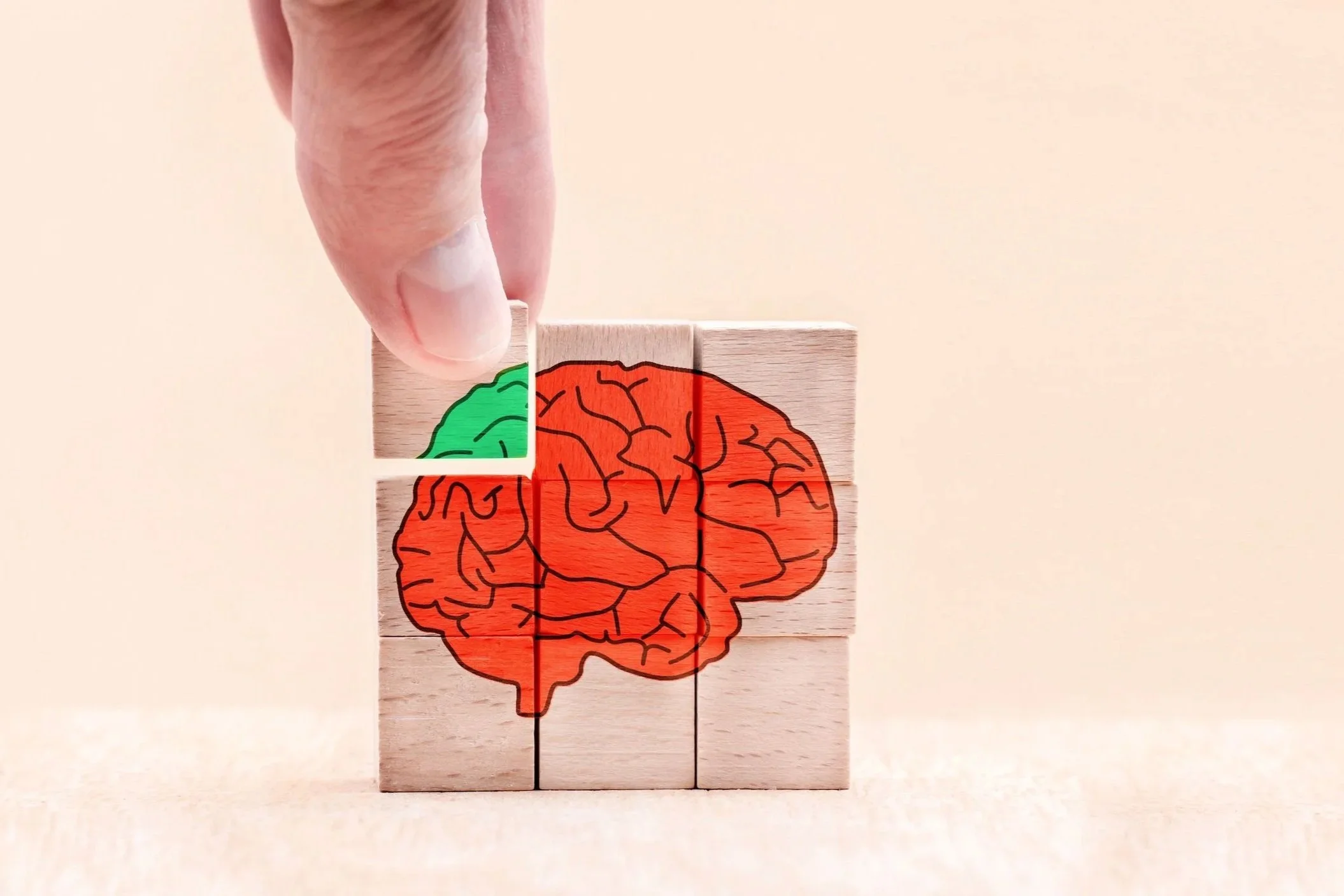
Let’s be entirely honest: most of us treat our brains like that one cupboard in the kitchen.
You know the one—stuffed with random containers, a bit chaotic, slightly neglected, but we just assume it will keep functioning indefinitely as long as we don’t look too closely.
We routinely demand peak performance, witty conversational skills, and flawless memory recall from our brains, whilst fueling them with lukewarm coffee, six hours of interrupted sleep, and the ambient anxiety of an overflowing email inbox.
But your brain is not an indestructible appliance; it is a highly sophisticated, beautifully adaptive organ that consumes roughly 20% of your body’s entire metabolic energy. Achieving an "optimal brain" isn't about becoming a flawless, robotic supercomputer overnight.
It is about understanding the fascinating biology under the hood, supporting neural resilience, and treating the connection between your mind and body with the respect it actually deserves.
Whether you are looking to banish the afternoon brain fog, protect your cognitive longevity, or stop walking into rooms and forgetting why you went in there in the first place, this guide provides a foundational framework for long-term neurological health.
1. The Cellular Foundations of Cognitive Performance
To optimize cognitive output, one must first look at the metabolic efficiency of the neuron.
The brain's processing power relies entirely on the rapid, seamless transmission of electrochemical signals across trillions of synaptic connections.
This immense energetic demand is met by cellular mitochondria, the powerhouses within neural cells.
When mitochondrial function compromises—whether due to chronic oxidative stress, systemic inflammation, or nutrient deficiencies—cognitive fatigue, diminished executive function, and "brain fog" manifest.
Optimising brain health requires a dual approach: accelerating mitochondrial biogenesis (the creation of new mitochondria) and mitigating the cellular inflammation that damages existing neural structures.
Furthermore, cognitive longevity is heavily dependent on Brain-Derived Neurotrophic Factor (BDNF).
BDNF acts as a biological fertiliser for the brain, stimulating the growth of new neurons (neurogenesis) and supporting the survival of existing ones. Higher levels of BDNF are consistently associated with enhanced learning capacity, superior memory retention, and robust resistance to age-related neurodegenerative diseases.
2. Neuroplasticity: Rewiring the Architecture of the Mind
For decades, early neurology operated under the assumption that the adult brain was a static, unchangeable organ. Modern neuroscience has completely dismantled this myth through the discovery of neuroplasticity—the brain’s lifelong capability to structurally and functionally reorganise itself in response to learning, environmental stimuli, and conscious experience.

Neuroplasticity operates on the principle of synaptic pruning and reinforcement: pathways that are repeatedly fired are strengthened through myelination (the insulation of neural fibers to increase signal speed), while unused pathways are systematically dismantled.
This means that cognitive decline is not an inevitable consequence of aging, but rather a reflection of under-stimulated neural networks.
By engaging in targeted cognitive challenges, variations in environmental complexity, and precise somatic protocols, individuals can consciously direct their neuroplastic development.
This structural adaptability is the cornerstone of recovering from chronic stress, breaking maladaptive behavioral loops, and unlocking higher-order executive functioning.
3. The Bi-Directional Axis: How the Body Shapes the Mind
An optimal brain cannot exist in isolation from the body. The mind-body connection is handled via physical pathways, specifically through two major bi-directional communication systems:
The Gut-Brain Axis
The enteric nervous system (the "second brain" in the gut) communicates constantly with the central nervous system via the vagus nerve.
Over 90% of the body’s serotonin and a significant portion of its dopamine are synthesised within the gastrointestinal tract, heavily influenced by microbial ecology.
Systemic gut inflammation compromises the blood-brain barrier, allowing pro-inflammatory cytokines to enter the cerebral matrix, disrupting neurotransmitter balance and directly impairing mood and clarity.
The Somatosensory Link
The brain determines its survival state based on feedback from the peripheral nervous system.
Chronic muscular tension, poor posture, and restricted breathing patterns signal to the amygdala that the organism is under threat, triggering a continuous, low-grade survival response.
Conversely, targeted somatic interventions can deliberately signal safety back to the brain, shifting cortical resources away from defensive survival and back toward high-level executive processing, logic, and creativity.
4. Clinical Frameworks for Cognitive Enhancement
Achieving peak cognitive state requires a multi-faceted approach that addresses biochemistry, lifestyle architecture, and direct neural stimulation.
Nutritional Neuro-Psychiatry: The brain requires a strict matrix of micronutrients to synthesize essential neurotransmitters.
Omega-3 fatty acids (specifically DHA) form the structural components of neural membranes, while polyphenols and fat-soluble antioxidants protect delicate neural lipids from peroxidation.
Sleep-Driven Glymphatic Clearance: True brain optimization is impossible without leveraging the brain’s unique waste-clearance mechanism: the glymphatic system.
During deep, non-REM sleep, glial cells shrink, allowing cerebrospinal fluid to wash through the brain tissue, clearing metabolic debris such as amyloid-beta plaques.
Exogenous Stimulation Modalities: Beyond lifestyle, contemporary protocols utilize non-invasive inputs to guide brainwave states.
Techniques such as neurofeedback, specific audio frequencies (binaural beats), and photobiomodulation (red-light therapy applied cranially) are emerging as highly effective tools that can alter cerebral blood flow, balance hemispheric activity, and promote targeted mental states—from deep focus to profound relaxation.
5. The Core Resource Directory (Deep Dives)
Achieving sustained cognitive excellence demands moving past generic advice and adopting precise, clinically backed, non-drug protocols. To evaluate your baseline neurological efficiency and discover if your current lifestyle is tuning or disrupting your focus, begin with our baseline audit, The Symphony of the Mind: Is Your Brain a Stradivarius or a Kazoo?
From there, you can target your specific cognitive performance goals. If you are experiencing age-related mental drift or subtle brain fog, you can deploy targeted memory-anchoring protocols by learning how to stop a fraying memory. For those looking to maximise deep-work blocks, eliminate environmental distractions, and rapidly compress learning curves, our high-impact guide on the student brain hack to double your focus and bulletproof your memory offers immediate, practical steps.
To unlock advanced focus and recovery, you can leverage neuro-entrainment and peak flow states. Start by exploring the genius glue of gamma brainwaves to isolate the precise high-frequency neural oscillations responsible for cognitive breakthroughs. You can safely trigger these states yourself by mastering the underlying mechanics to hack your brainwaves with binaural beats. Finally, to maintain this high-level output without burnout, discover how to seamlessly integrate these sound therapies into your daily routine for optimal living with binaural beats to beautifully balance your nervous system.
6. The Path Forward: Building Your Brain Architecture
At the end of the day, upgrading your brain health isn't about achieving absolute perfection or flawlessly executing a twenty-step neurological routine before sunrise.
It’s simply about making choices that give your neurons a fighting chance. When you choose a nutrient-dense meal, prioritize a solid night of deep sleep, or deliberately slow your breathing to calm an overactive nervous system, you are actively participating in the architectural design of your own mind.
Think of this hub page as the structural scaffolding for your brain's evolutionary journey.
As this platform grows, this master guide will anchor an ever-expanding library of specific, deeply researched spoke articles.
We will dive into the exact protocols, science-backed tools, and practical habits that allow you to take the driver's seat in your own cognitive longevity.
For now, give yourself a little credit, perhaps fetch a glass of water for those hardworking mitochondria of yours, and let's get ready to build a more resilient mind together.
Read This Now





Disclaimer: This article is for general informational purposes only and does not address individual circumstances, substitute for professional advice, or serve as a basis for decision-making. You should always seek the guidance of a physician or qualified healthcare provider regarding a medical condition, and never disregard or delay seeking professional medical advice due to this content. Any action taken based on this information is entirely at your own risk and responsibility; Energetics, its staff, and its medical advisors disclaim all liability for any inaccuracies, errors, or any personal or professional loss incurred as a direct or indirect consequence of using this content.