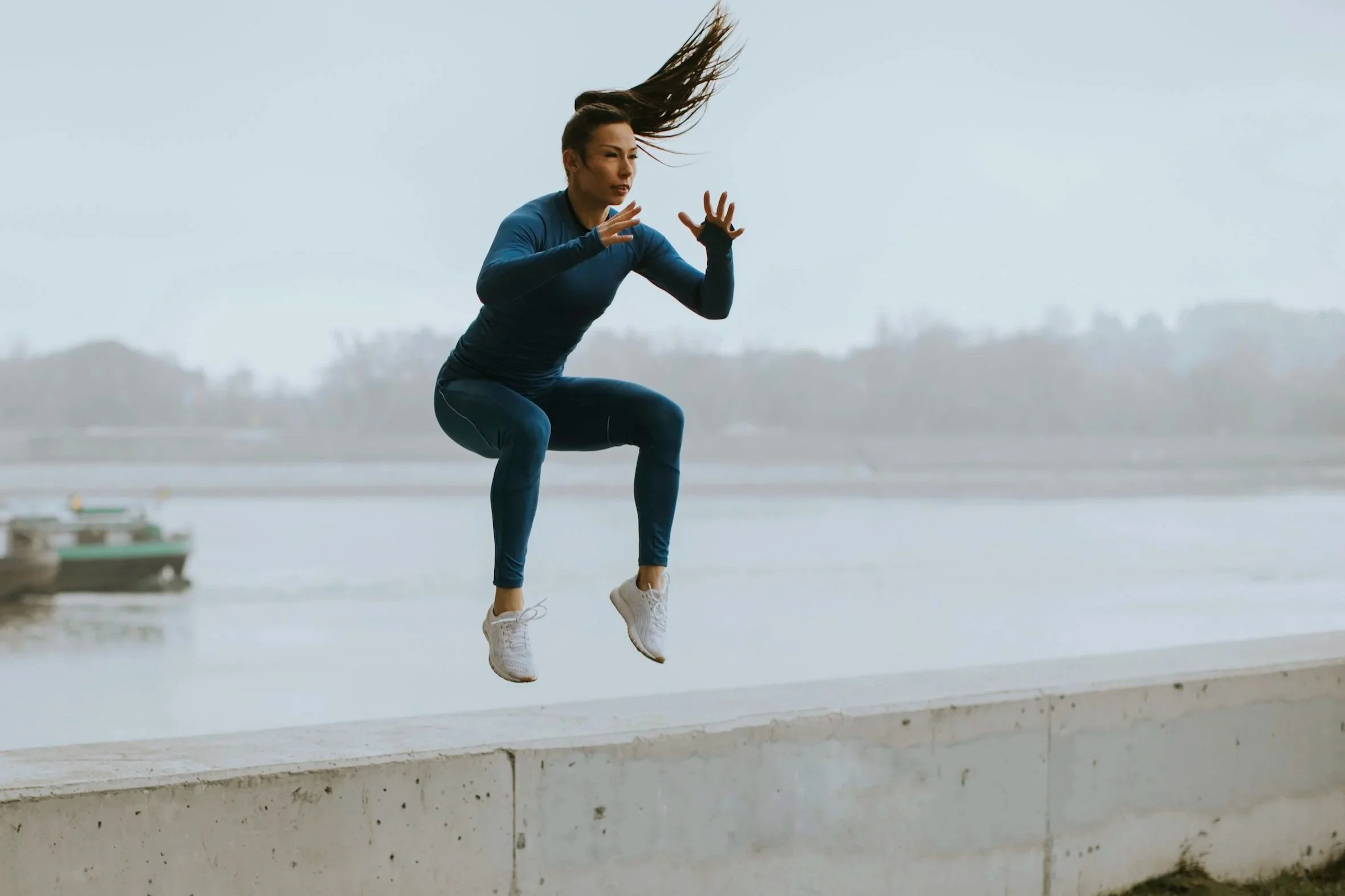
Reading Time: 5 minsThe whistle blows. The race is over. The final bell rings.
Physically, your work is done.
But internally, your body is still at war.
Hours after a high-intensity game, match, or training session, your heart is likely still pumping fast, your muscles are tight, and your mind is buzzing with residual adrenaline.
When you finally climb into bed, you find yourself staring at the ceiling—exhausted but completely unable to sleep.
This is the classic post-game hangover: your nervous system is trapped in sympathetic dominance (fight-or-flight mode).
During a hard effort, your body goes to extreme lengths to keep you alive and competitive.
But once the physical threat has passed, staying in this high-alert state is highly toxic to your recovery. It stalls muscle repair, blocks glycogen replenishment, and ruins your sleep quality.
If you want to grow stronger, you need to turn off the alarm bells immediately.
Let’s look at the neuroscience of post-game hyper-arousal and how athletes can use deep, low-frequency Delta-wave binaural beats to forcibly switch off fight-or-flight mode and kickstart the recovery process.
The Danger of the Post-Game Sympathetic Hangover
When you train or compete, your hypothalamus-pituitary-adrenal (HPA) axis floods your system with cortisol, adrenaline, and noradrenaline.
This sympathetic cocktail ensures your heart beats faster, your airways dilate, and non-essential functions—like digestion and tissue repair—are shut down.
Under normal circumstances, your parasympathetic nervous system ("rest and digest") should take back control within an hour of finishing.
But after highly competitive games, late-night training sessions, or emotionally charged races, this transition fails.
Your brain continues to register high levels of excitement, stress, or frustration, keeping the sympathetic nervous system switched on. This prolonged state leads to:
Elevated Resting Heart Rate: Your heart continues to beat faster than normal, wasting valuable energy.
Impaired Heart Rate Variability (HRV): A low HRV post-exercise indicates that your autonomic nervous system is struggling to find balance, signalling poor systemic recovery.
Sleep Deprivation: High adrenaline blocks the release of melatonin, meaning even if you do sleep, you miss out on the deep, slow-wave restorative sleep stages where human growth hormone (HGH) is naturally released to repair muscle tissue.
Delta Waves: The Ultimate Neural Off-Switch
To break out of a post-game sympathetic loop, you need to guide your brainwaves down to the lowest, most restorative frequency band: Delta waves (0.5 to 4 Hz).
Delta waves are the slowest brainwave frequencies.
They are dominant during stage 3 and 4 non-rapid eye movement (NREM) sleep—the deepest, most physically restorative stages of human rest.
When you use binaural beats to entrain your brainwaves to a Delta frequency (such as 2 Hz) after a game, you are essentially providing an auditory blueprint for deep rest.
If you are interested in how to hack your sleep using delta binaural beats, read this here.
Here is how this auditory hook forces your physiology to calm down:
1. Rapid Heart Rate Reduction
By presenting a slow, rhythmic Delta binaural beat to your auditory cortex, you encourage your brain’s neural firing to slow down.
As the brain settles, the vagus nerve is highly stimulated.
The vagus nerve acts as a brake pedal for your cardiovascular system, releasing acetylcholine to rapidly drop your heart rate, lower your blood pressure, and dilate your constricted blood vessels.
2. Clearing the Stress Chemical Hormones
Slowing your brainwaves down to a Delta state sends a clear message to the adrenal glands: the battle is over.
The production of adrenaline and cortisol is shut down.
This allows your liver and kidneys to clear the remaining stress hormones from your bloodstream, shifting your body from a catabolic (tissue-breaking) state to an anabolic (tissue-building) state.
3. Priming the Brain for Restorative Sleep
Using Delta binaural beats in the evening post-game acts as a bridge to natural sleep.
By pre-entraining your brain to Delta frequencies before your head hits the pillow, you bypass the restless tossing and turning caused by late-night adrenaline, allowing you to slip straight into the deep sleep cycles where actual muscular repair takes place.
The Post-Game "Down-Regulation" Protocol
This protocol is designed to be completed 1 to 2 hours after your game ends, once you are home, showered, and back in a quiet, distraction-free environment.
Rather than listening for hours, you only need to listen to the Delta waves for 15 to 30 minutes in total whilst combining the audio with targeted breathing and a passive body scan.
1.Get comfortable and plug in: 1-2 hours post-game.
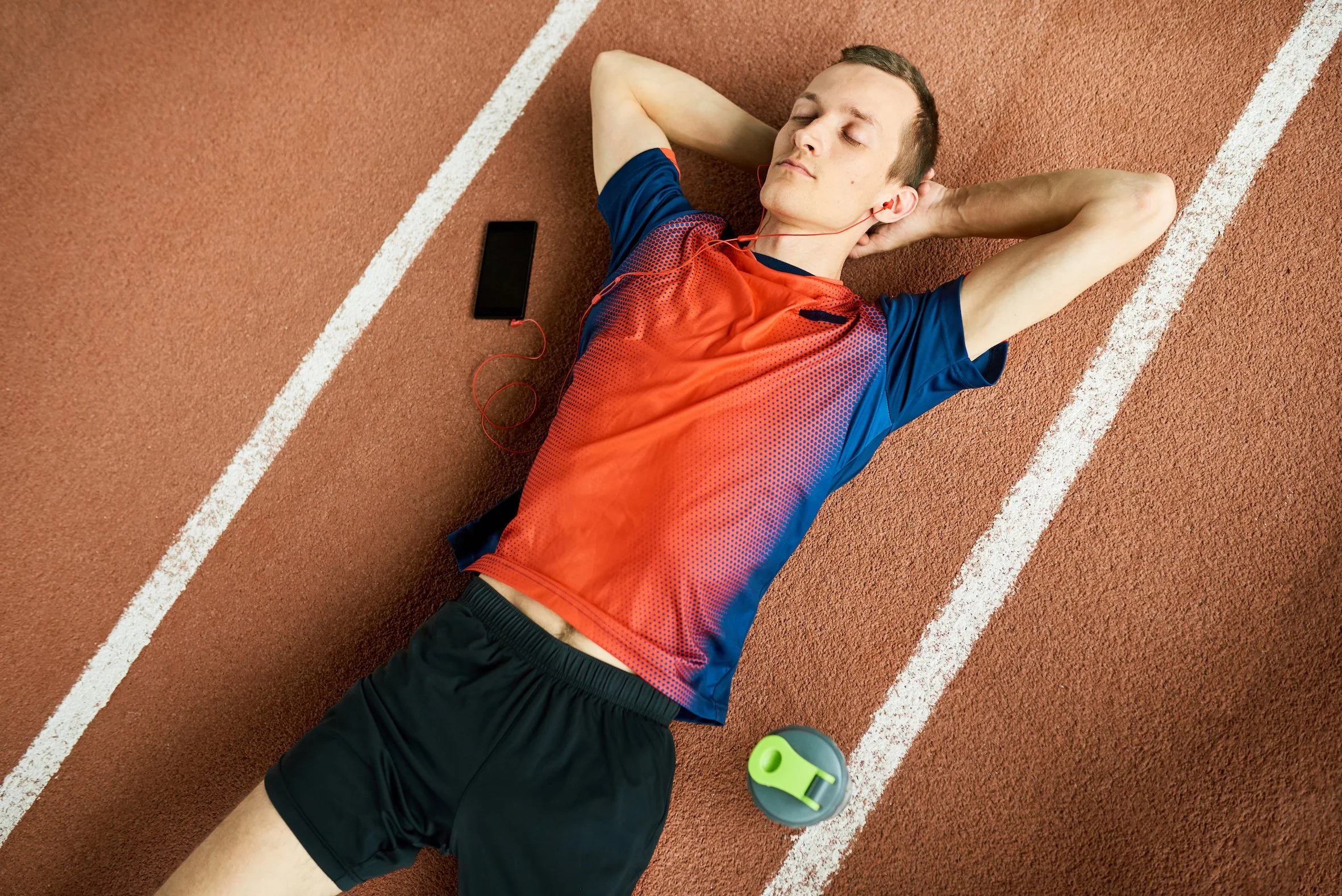
Find a quiet, dimly lit room. Lie down flat on your back or sit in a highly supportive chair.
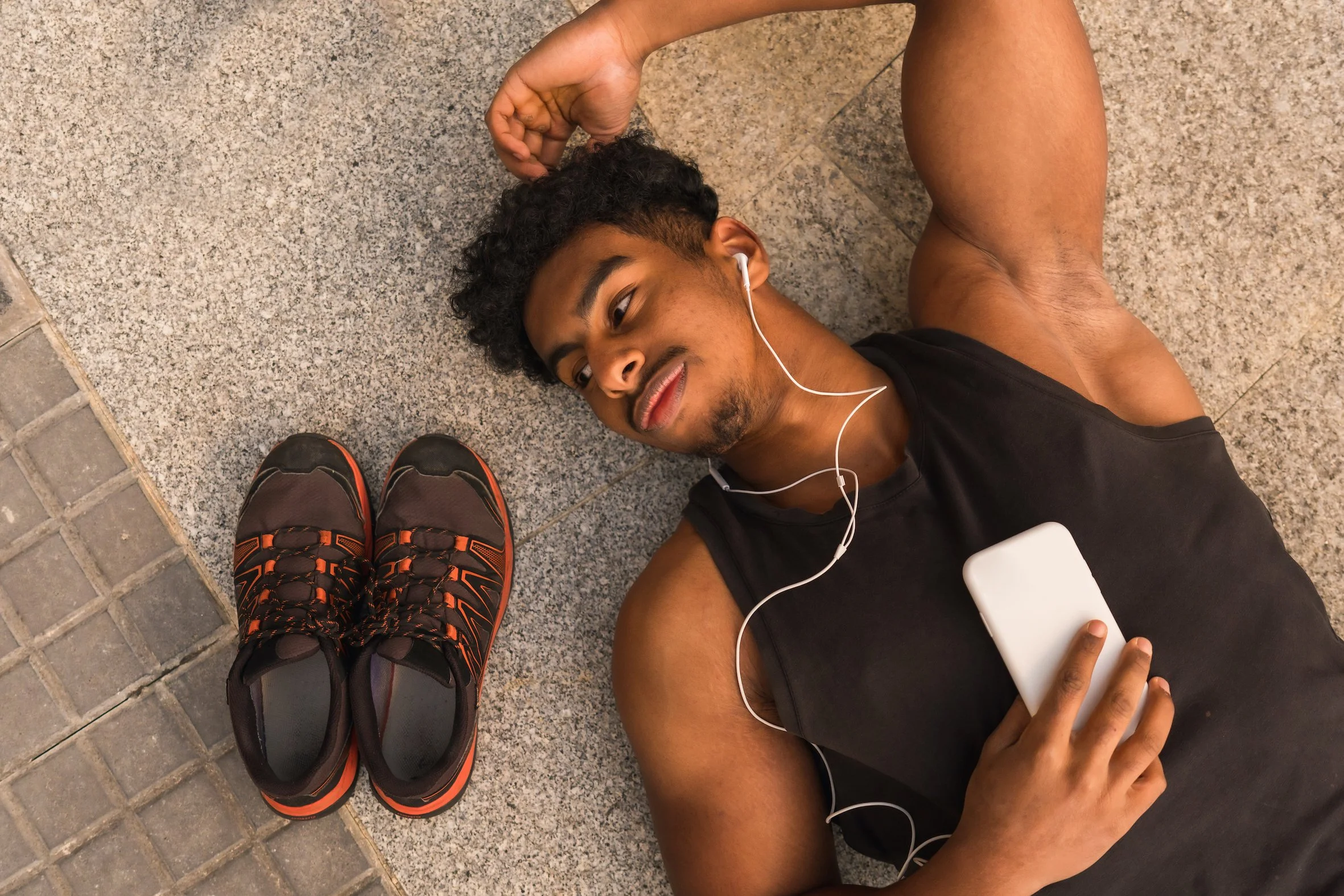
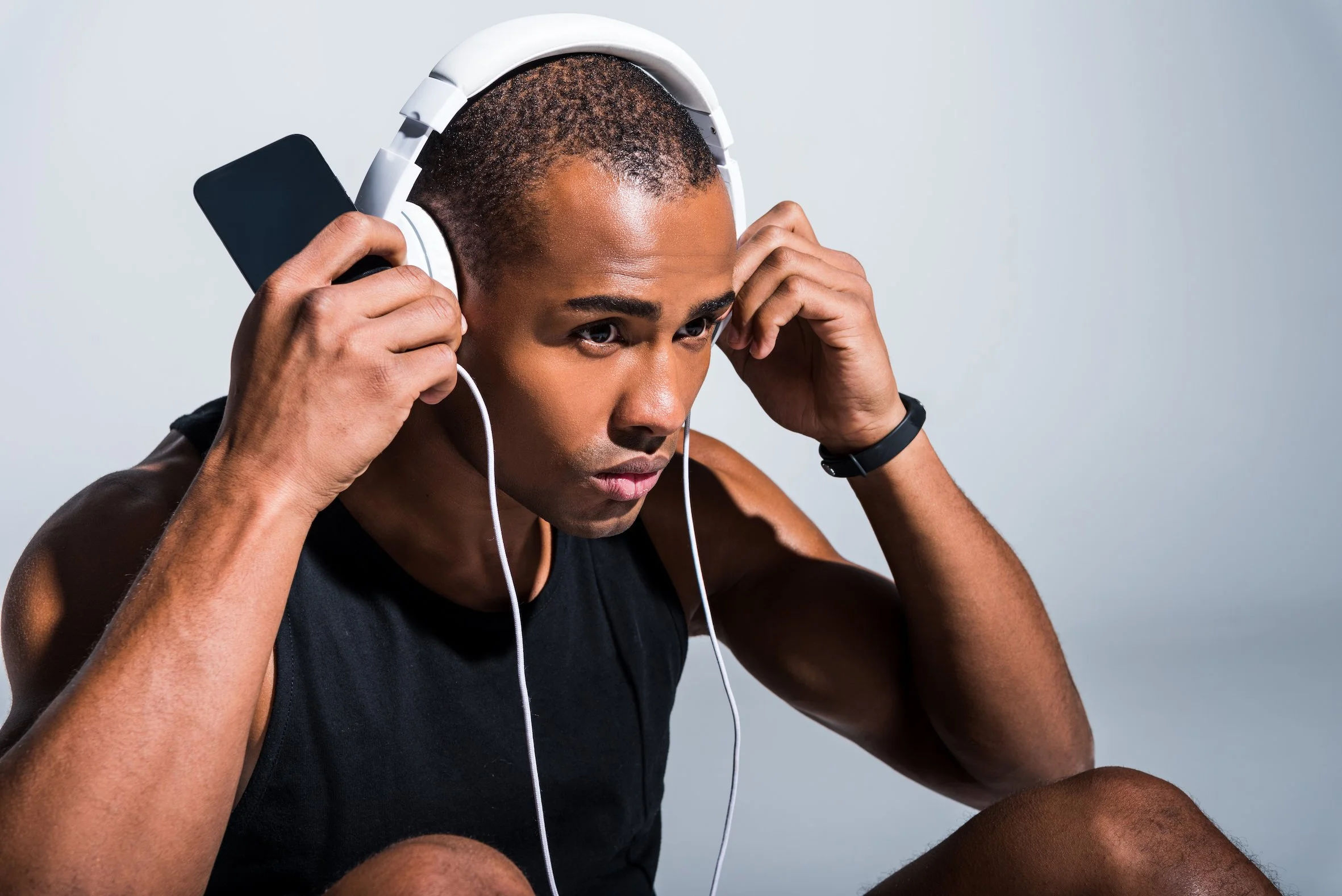
Put on a pair of comfortable, stereo headphones and play your Delta-frequency (2 Hz to 3 Hz) binaural beat track.
2.Exhale-focused breathing: Minutes 0 to 10.
As you listen to the track, close your eyes. Inhale slowly through your nose for 4 seconds, then exhale even more slowly through your nose for 6 to 8 seconds.
Extending your exhalations works in perfect harmony with the Delta frequencies to stimulate your vagus nerve and slow your pulse.
3.The passive body scan: Minutes 10 to 30.
For the remaining 10 to 20 minutes of the session, let your breathing find a natural, effortless rhythm.
Focus your attention entirely on the sound of the Delta waves.
Mentally scan your body from your head to your toes, consciously inviting your jaw, shoulders, core, and hips to sink heavily into the floor and relax with each passive breath.
Practical Recovery Tips for Late-Night Games
If you struggle to wind down after evening training, use these extra tips alongside your Delta protocol:
Ditch the Screens: Blue light from phones and televisions mimics sunlight, further suppressing melatonin and fighting against your Delta-wave entrainment.
Switch off screens during your down-regulation protocol.
Keep it Cool: A hot shower or bath post-game feels great, but your body needs its core temperature to drop to initiate deep sleep.
Ensure your bedroom is cool (around 16 to 18°C) to help your body transition into a resting state.
Avoid Late Caffeine: It sounds obvious, but consuming pre-workout supplements or energy drinks late in the day will keep your sympathetic nervous system locked in overdrive, completely blocking the effectiveness of any down-regulation protocol.
The Verdict: Don't Leave Recovery to Chance
The work you put in during training only matters if your body has the physiological opportunity to rebuild itself.
If you leave the pitch or gym and stay in a state of hyper-alert stress for hours, you are actively flushing your hard work down the drain.
By using Delta-frequency binaural beats to actively guide your nervous system out of fight-or-flight mode, you take control of your recovery.
Instead of fighting post-game adrenaline all night, you can pull the emergency brake on your stress response, lower your heart rate, and set your body up for the deep, restorative sleep it needs to come back stronger.
To learn more about how to Down-Regulate After Training with Delta Binaural Beats, read this next, where you can learn about how to pull the emergency brake on late-night adrenaline and switch off "fight-or-flight" mode post-workout.
References & Bibliography
Dabiri, R., Monazzam Esmaielpour, M. R., Nodoushan, M. S., & Zakerian, S. A. (2022). The effect of auditory stimulation using delta binaural beat for a better sleep and post-sleep mood: A pilot study. DIGITAL HEALTH. https://doi.org/10.1177/20552076221102243
M. Chockboondee, T. Jatupornpoonsub, K. Lertsukprasert and Y. Wongsawat, "Long and Short Durations of Binaural Beats Differently Affect Relaxation: A Study of HRV and BRUMS," in IEEE Access, vol. 11, pp. 84842-84851, 2023, doi: 10.1109/ACCESS.2023.3303183.
De, A., & Islam, M. S. (2025). The Neurophysiological Impact of Sound Therapy on Stress Reduction and Motor Performance in Athletes. Heart and Mind, 10(1), 75–78. https://doi.org/10.4103/hm.HM-D-25-00054
Malhotra V, Gupta A, Javed D, Cidral-Filho FJ, Porter PK. Effect of brainwave entrainment on sleep quality among MBBS students in India. Bioinformation. 2026 Jan 31;22(1):122-127. doi: 10.6026/973206300220122. PMID: 41960473; PMCID: PMC13058366.
Read This Next